Blogs

Stand Up Paddle Boarding for begginers
Stand-Up Paddle Boarding for Beginners — A Practical, Safe Guide to Your First SUP Outing
Stand-up paddle boarding (SUP) is an easy-to-start watersport that uses a wide, stable board and a single-bladed paddle to glide across flat water, lakes, and gentle rivers. This guide walks you through the essentials—how to carry and launch a board, the kneel-to-stand progression, basic paddle strokes, balance drills, and the safety habits every new paddler should follow—so you feel ready for your first trip. If gear or learning alone feels intimidating, Mountain Surf Paddle Sports in Fayetteville, West Virginia, runs beginner-friendly guided tours and rentals at New River Gorge and Summersville Lake to get you started. Most beginners gain confidence fastest with a short guided session that pairs on-land instruction with calm on-water practice. Below we explain what SUP is and why it’s ideal for beginners, how to choose or rent the right gear, step-by-step standing and stroke techniques, safety and local etiquette, the perks of guided tours, and a simple roadmap to try special outings like full-moon or sunset paddles. Read on for clear, practical steps that reduce first-time nerves while keeping safety and local conditions top of mind.
What Is Stand Up Paddle Boarding and Why Is It Great for Beginners?
Stand-up paddle boarding (SUP) puts you upright on a buoyant board while you propel yourself with a paddle—combining balance, low-impact cardio, and time outside into one activity. Wide, high-volume boards give immediate stability, and learning to paddle delivers quick, tangible progress, which makes SUP especially approachable for newcomers.
SUP is a great beginner sport because it builds core and leg strength without high impact, works well for families or small groups, and lets you explore calm coves and slow river bends at an easy pace. Local spots matter: sheltered sections of the New River Gorge and protected bays on Summersville Lake are perfect practice areas, and local guides can point you to the gentlest launches. Knowing these advantages explains why many first-timers choose a guided session to speed learning and reduce risk.
What Are the Benefits of Paddle Boarding for New Paddlers?
Paddle boarding combines fitness, balance training, and relaxed time outdoors—making it a great fit for many beginner profiles. Physically, paddling engages your core, back, shoulders, and legs, improving functional strength and posture without stressing joints. Mentally, steady paddling and time on the water reduce stress and encourage focus, while scenery—like New River Gorge cliffs or Summersville Lake shorelines—adds a restorative element. Socially, SUP is family-friendly: kids can ride with adults or join age-appropriate sessions, and group lessons speed learning through shared encouragement. Those combined benefits help explain why many beginners turn SUP into a regular outdoor habit.
Research highlights that SUP offers meaningful cardiovascular, musculoskeletal, and psychological benefits for new practitioners.
Biomechanical Analysis of the Stand-Up Paddleboard Stroke: Performance and Injury Prevention
Stand-up paddleboarding (SUP) is a rapidly expanding aquatic sport with growing participation across recreation, competition, and rehabilitation. Research on the paddle stroke remains limited; this study used three-dimensional motion analysis to compare kinematic differences between experienced and novice paddlers. The findings offer useful insight for participants, coaches, and health professionals aiming to boost performance and reduce injury risk. A biomechanical analysis of the stand-up paddle board stroke: a comparative study, B Schram, 2019
Beginners often gain improved core strength, low-impact cardio, and stress relief from outdoor time.
SUP fits families and mixed-ability groups because boards and tours can accommodate different skill levels.
Choosing calm, beginner-friendly local spots speeds skill development and makes first outings more enjoyable.
Those benefits point straight to choosing the right practice locations, which we’ll cover next.
Where Can Beginners Paddle Board Safely in the New River Gorge and Summersville Lake?
Beginners should choose protected launch sites—sheltered lake coves, slow river bends, or public access points with gentle entries—rather than open, windy stretches or faster currents.
Both New River Gorge and Summersville Lake offer calm pockets—quiet coves on Summersville Lake and flat-water stretches of the New River—where the shore is nearby for quick rests or easy returns.
Practical tips: arrive early to find parking, launch from sandy or gradual-sloped ramps when possible, and avoid busy boat channels or known current lines; if you’re unsure, check conditions with a local outfitter.
Seasonal changes matter—afternoon winds and cooler shoulder seasons affect risk—so picking sheltered morning conditions is a reliable strategy.
For first-timers, a local guided tour will identify the best launch points and current conditions so your first paddle is relaxed and safe.
How Do You Choose the Best Paddle Board and Gear for Beginners?

Picking a beginner board is mostly about stability, portability, and keeping things simple so you actually get on the water. Stability comes from board width and volume—wider, higher-volume boards feel steadier—while length and hull shape affect tracking and how the board moves through the water.
Think about transport and storage: inflatable SUPs (iSUPs) pack down for easy travel and are forgiving on docks, while hardboards glide better but need roof racks or a larger vehicle. Most beginners are best off renting first—rentals remove the upfront cost, let you try different board types, and guided rentals usually include paddles, PFDs, and leashes so your first trips are straightforward and safe.
Here’s a quick checklist of what to consider when evaluating boards:
Stability: width and volume determine how steady a board feels to a novice.
Portability: how you’ll transport and store the board matters for regular use.
Price and durability: consider long-term value if you plan to paddle often.
Those factors explain the common beginner choice between inflatable and hard boards summarized in the table below.
Different board types trade stability, portability, and performance for different uses.
Board TypeStabilityPortabilityPrice RangeBest Use CaseInflatable SUP (iSUP)High for beginners thanks to wider profilesVery portable; deflates for storageLow–MediumRentals, casual lake paddles, travelHardboard SUPMedium–High depending on model; better glideLess portable; needs racksMedium–HighPerformance, long flatwater paddlesTouring/Hybrid SUPMedium stability, superior trackingModerate; often rigidMedium–HighLonger excursions where speed matters
This comparison shows why inflatables are a common beginner pick for stability and convenience. Next we cover essential gear beyond the board itself.
What Are the Differences Between Inflatable and Hard Paddle Boards for Beginners?
Inflatable SUPs give forgiving buoyancy, softer landings, and the convenience of packing into a backpack or trunk—great when logistics are a concern. Hardboards usually track better and feel faster, which appeals to paddlers who want improved performance for longer straights.
Durability is nuanced: modern iSUP constructions are tough against dings, while hardboards can be more susceptible to impact but often last longer with proper care. Your intended use matters: casual or infrequent paddlers with limited storage often choose inflatables, while committed paddlers seeking speed and responsiveness may upgrade to a hardboard later.
SUP’s accessible learning curve and versatility make it an attractive choice, offering solid cardiovascular and strength-training benefits.
Epidemiology of Injuries in Stand-Up Paddleboarding: Learning Curve and Health Benefits
Stand-up paddleboarding (SUP) appeals because of its accessible learning curve, adaptability to different water environments, and its value as a cardiovascular and strength-training activity. This study examines injury patterns and highlights the sport’s health and fitness benefits for participants. Epidemiology of injuries in stand-up paddle boarding, J Furness, 2017
Knowing these trade-offs helps you match board type to your storage, transport, and performance goals.
What Essential Paddle Board Gear Do Beginners Need?
Beginners need a few basic items for safety and comfort: a correctly sized paddle, a Coast Guard–approved personal flotation device (PFD), a leash, sun protection, and clothing suited to the water temperature.
A properly sized paddle cuts fatigue and improves stroke efficiency; a leash keeps the board close after a fall and is vital in wind or current. Helpful extras include a waterproof phone case, a hydration pack, and light footwear for rocky launches.
Mountain Surf Paddle Sports supplies full gear on guided tours and many rentals—boards, paddles, and PFDs—so beginners can show up ready to learn without owning equipment. That rental-first approach lets newcomers focus on technique and safety instead of gear logistics.
Gear ItemWhy it MattersMountain Surf ProvidesPaddleImproves efficiency and reduces fatigueYes, properly sized paddles includedPFDEssential flotation and peace of mindYes, approved PFDs providedLeashKeeps your board nearby after a fallYes, leash supplied on rentals/toursSun protectionPrevents sunburn and overheatingRecommended by guides; bring sunscreen
This checklist and table make it clear what you need for safe paddling and what a guided rental usually supplies, simplifying your first outings.
How Do You Learn to Stand Up and Paddle Board Easily?
The best learning sequence is progressive: safe carry and launch, kneeling practice, the one-knee transition, standing with weight centered, then basic strokes and balance drills. Moving from a low center of gravity (kneeling) to standing builds motor skills gradually and keeps falls to a minimum. Dry runs on land—practicing stance and paddle grip—shrink first-on-water nerves and speed up learning. The core move to practice is the stepwise stand: go from kneel to a steady upright posture, then paddle short strokes to regain balance and confidence.
What Are the Step-by-Step Instructions to Stand Up on a Paddle Board?
Follow this simple sequence to stand safely and repeatably:
Start Kneeling: Kneel near the board’s midpoint with hands on the paddle to find balance.
Move to One Knee: Bring one foot forward into a half-kneel to feel how the board responds.
Use the Paddle for Support: Hold the paddle as a bracing point while you shift weight forward.
Rise Smoothly to Your Feet: Step the back foot up to meet the front foot, keep knees soft, and look ahead.
Set Your Stance: Stand with feet about shoulder-width apart, toes forward, and engage your core for stability.
These steps limit sudden weight shifts that cause falls and give you a calm, coach-like rhythm to follow. Repeat them until each movement feels deliberate—then move on to basic strokes and steering.
What Basic Paddle Strokes and Maneuvers Should Beginners Master?
Three strokes will cover most on-water needs: the forward stroke for propulsion, the sweep stroke for turning, and the reverse stroke for slowing or backing up.
The forward stroke relies on torso rotation and long, even pulls: enter the blade near the board’s nose and exit at your hip to maximize efficiency.
The sweep stroke arcs from nose to tail to create a turning force, while the reverse stroke mirrors the forward stroke to slow or back up.
Practice short sets—ten forward strokes, five sweep strokes each side, and controlled reverse strokes—to blend stroke mechanics with balance. Mastering these basics makes local navigation and safe returns much easier.
What Safety Tips and Common Mistakes Should Beginners Know?
Safety comes first: wear a PFD, use a leash, check weather and water conditions, and start in calm, protected areas to avoid most common risks.
Learn how to fall safely—away from the board and feet-first when possible—to reduce injury, and carry simple signaling items such as a whistle to call for help if needed.
Keep local factors in mind: boat traffic, seasonal river flows, and wind patterns on New River Gorge and Summersville Lake can change quickly; when in doubt, check with a local guide or rental operator for current advisories.
Below are foundational rules to follow on every outing.
Wear a Coast Guard–approved PFD on every outing, especially where currents or boats are present.
Attach a leash at your ankle or calf so your board stays close after a fall.
Check weather forecasts, wind predictions, and local advisories before you launch.
Use the buddy system or tell someone ashore your route and expected return time.
What Are the Essential Safety Guidelines for Beginner Paddle Boarders?
Keep safety simple and consistent: wear a properly fitted PFD, use a leash that suits local conditions, and treat your board as a flotation aid when you need rest. Watch wind and weather—the calm morning bay can stiffen into an afternoon breeze—and identify exit points along your route so you can get off the water quickly if conditions change. Bring minimal safety gear—a whistle, water, and a small dry bag for essentials—to make guided or solo outings more resilient to surprises.
What Common Beginner Mistakes Should You Avoid When Paddle Boarding?
Beginners often make a few predictable mistakes that slow progress or raise risk, but each has a quick fix. Looking down at your feet upsets balance—keep your eyes on the horizon to stabilize your posture. Gripping the paddle too tightly or using only your arms tires you out—relax your grip and rotate from your core. Standing too early or locking your knees causes wobble—follow the kneel-to-stand progression and keep knees soft. Fix these early and your progress will be faster and more fun.
Understanding paddle-stroke biomechanics can improve performance and reduce injury risk for new paddlers.
Biomechanical Analysis of the Stand-Up Paddleboard Stroke: Performance and Injury Prevention
Stand-up paddleboarding (SUP) is growing rapidly, yet detailed study of the paddle stroke is limited. This research compared kinematic differences between experienced and novice paddlers using three-dimensional motion analysis. Its conclusions provide practical guidance for improving technique and reducing injuries. A biomechanical analysis of the stand-up paddle board stroke: a comparative study, B Schram, 2019
What Are the Specific Rules and Etiquette for Paddle Boarding in the New River Gorge?
Local rules and common-sense etiquette protect paddlers and preserve the area. Follow launch-site signage and parking rules, don’t block ramps or access points, and pack out your trash. Yield to powered boats in open channels, give swimmers and wildlife plenty of space, and communicate clearly when passing other paddlers. Observing these norms keeps the waterways safe and enjoyable for everyone and follows Leave No Trace principles used across local sites.
Why Is a Guided Beginner Paddle Boarding Tour the Best Way to Start?
A beginner guided tour speeds learning by combining short on-land instruction with on-water coaching, local route knowledge, and all-inclusive gear so you can focus on comfort and technique. Guides pick calm launch spots, tailor instruction to group ability, and model safe practices—so you spend more time building skills and less time juggling logistics. For many first-timers, guided trips lower perceived risk and build confidence fast. Mountain Surf Paddle Sports highlights these benefits for paddlers at New River Gorge and Summersville Lake.
What Are the Benefits of Joining a Guided SUP Tour for Beginners?
Guided SUP tours bundle instruction, safety oversight, local route knowledge, and gear so beginners can concentrate on learning and enjoying the water. Guides give hands-on coaching—correcting technique and balance in real time—while choosing sheltered routes that match the group’s comfort. Tours remove the gear barrier, since paddles, PFDs, and leashes are usually included, making it easier to try the sport. For families and mixed-ability groups, guided outings create a relaxed learning environment where everyone can progress together under supervision.
Guides deliver immediate, tailored feedback that speeds skill learning.
Tours remove gear and logistics stress by supplying essentials.
Local guides pick safe, scenic launch points suited to beginners.
Next, here’s what a typical guided experience looks like with a local operator.
What Can You Expect on Mountain Surf Paddle Sports’ Guided Paddleboarding Tours?
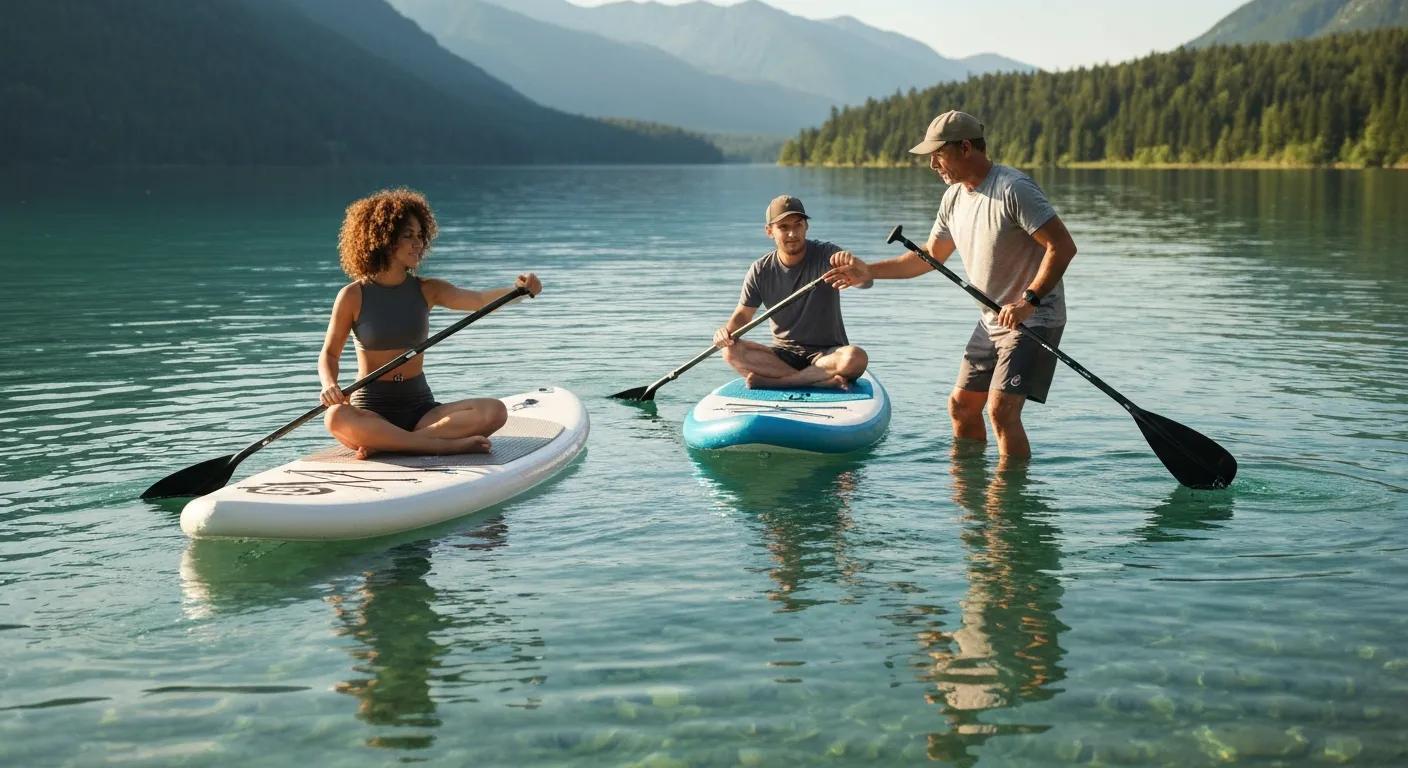
Mountain Surf Paddle Sports offers beginner-focused guided tours and rentals at New River Gorge and Summersville Lake that prioritize safety, friendly instruction, and scenic exploration. Typical tours begin with an on-land orientation covering paddle setup, a safety briefing, and basic balance coaching, followed by a warm-up and progressive on-water drills with hands-on guidance. Tours include gear—boards, paddles, PFDs, and leashes—and guides often take photos so you can review technique later; family policies let children ride with adults or join age-appropriate sessions. Local pricing commonly places group adult guided tours around $60, while specialty Full Moon and Sunset paddles are often offered at about $50, making guided sessions an affordable way to start.
Tour TypeIncludesTypical Duration / Price ExampleBest ForStandard Guided TourOn-land intro, gear fitting, on-water coaching, photos~1.5–2 hours / ~$60 adult guided tour exampleFirst-time paddlers, familiesSunset PaddleEvening route, guided safety, scenic views, photos~1–1.5 hours / ~$50 exampleBeginners ready for short evening outingsFull Moon PaddleLow-light navigation guidance, safety brief, photos~1–1.5 hours / ~$50 exampleConfident beginners seeking unique experience
This comparison helps you choose the tour that fits your skill and interest, and shows how guided options reduce beginner friction while improving safety.
How Do Paddle Board Rentals Support Beginner Exploration?
Rentals are a solid step between guided lessons and paddling on your own. They let beginners practice skills, explore nearby coves, and build confidence without buying gear. Inflatable SUPs are often recommended for novices because they’re stable and easy to transport; rental shops usually supply paddles, PFDs, and leashes so you can focus on practicing.
If you rent independently, follow a short safety checklist—check wind, tell someone your plan, pick a short route, and return before conditions change—to keep outings low-risk.
Many beginners start with an initial guided session and then use rentals to reinforce skills before deciding whether to buy equipment.
How Can Beginners Progress and Enjoy Unique Paddle Boarding Experiences?
Progression is straightforward: build stability and basic strokes, increase distance and time on the water, then try specialty outings like sunset or full moon paddles once you feel confident. Short, regular practice sessions that focus on specific drills produce steady gains: better balance, improved stroke efficiency, and smoother navigation. Specialty events add variety and motivation—soft evening light, reflective water, and group camaraderie make sunset and full-moon paddles memorable next steps for paddlers who have the basics down. Below is a simple roadmap from first lessons to unique local outings.
What Are Advanced SUP Options Like Full Moon and Sunset Paddle Board Tours?
Full moon and sunset paddle tours are guided routes timed for special lighting and atmosphere and require extra attention to visibility, safety gear, and guide-led navigation. These tours turn an ordinary paddle into a memorable event with fewer crowds and dramatic views, but they assume paddlers can control their boards and execute basic strokes confidently.
Safety on these tours includes required lights or reflective gear, closer guide oversight, and often shorter routes to keep the group together. For beginners who have finished initial guided sessions and can paddle comfortably for 30–45 minutes, these tours are great next steps to expand skills while enjoying a unique time on the water.
SUP is widely recognized for its health and fitness benefits, offering cardiovascular, musculoskeletal, and psychological advantages for new paddlers.
Stand Up Paddleboarding: Health, Fitness, and Psychological Benefits for Novice Practitioners
This research outlines the cardiovascular, musculoskeletal, and psychological benefits that novice participants can gain from stand-up paddleboarding. The study supports SUP’s role as a beneficial activity for general health and fitness. The physiological, musculoskeletal and psychological effects of stand up paddle boarding, B Schram, 2016
How Can Beginners Build Confidence and Skills for Independent Paddle Boarding?
A simple 4–6 week practice plan speeds progress and builds confidence: start with two guided or coached sessions in week one, then aim for 2–3 short solo practice outings per week focused on stand-up drills, forward stroke sets, and turning practice. Track milestones—like a steady 30-minute paddle, confident launch and landing, and reliable turns—to measure improvement and stay motivated. Cross-training (core work, single-leg balance, and mobility exercises) helps board stability and reduces falls. Once you consistently meet milestones and can assess weather and route risks, renting on your own or buying gear becomes a natural step toward regular SUP outings.
Begin with guided instruction to learn core skills.
Practice short, frequent sessions with clear drills.
Use milestone goals to judge readiness for solo paddling.
Following these steps builds a clear path from first lessons to independent paddling and specialty outings, helping you continue to grow and enjoy time on the water.
Frequently Asked Questions
What Should Beginners Know About Weather Conditions Before Paddle Boarding?
Weather matters. Check forecasts for wind, temperature, and storms before you go. Light winds and clear skies make for the easiest paddling—strong wind can kick up waves and current. Learn local patterns, since conditions at New River Gorge can shift quickly, and choose calmer times of day (early morning is usually best) for a safer first outing.
How Can Beginners Improve Their Balance on a Paddle Board?
Balance improves with practice. Try land drills like standing on one leg or using a balance board, and on the water keep knees slightly bent and weight centered. Use your core, relax your shoulders, and look ahead—not down at your feet. Regular sessions in calm water build confidence and stability over time.
What Are the Best Practices for Falling Safely While Paddle Boarding?
Falling is part of learning—do it safely. If you’re tipping, aim to fall away from the board and enter feet-first when possible to avoid hitting the board. Keep arms tucked to protect shoulders. Pause to recover before climbing back on, and use the board as a floating platform if you need a rest.
How Can Beginners Choose the Right Paddle Board Rental Service?
Pick a rental shop that offers a range of boards (inflatable and hard) so you can find a good fit. Confirm that safety gear—life jackets and leashes—is included, and ask about staff experience and any quick lessons they offer. Read reviews or get recommendations to find a reliable shop that prioritizes safety and customer support for first-timers.
What Should Beginners Do If They Encounter Wildlife While Paddle Boarding?
Wildlife encounters are a highlight—watch quietly and keep distance. Stop paddling, stay calm, and avoid sudden movements. Never feed or touch animals; let them go about their business. Respecting wildlife protects you and preserves local habitats for everyone to enjoy.
What Are the Key Differences Between Group and Solo Paddle Boarding Experiences?
Group outings are social and supportive—guided tours provide instruction and safety oversight, making them ideal for beginners. Solo paddling gives freedom to practice at your own pace but requires confidence with safety routines and local conditions. Many paddlers mix both: start in a group, then practice solo as your skills grow.

Our Customers Say About Us


It is a long established fact that a reader will be distracted by the readable content of a page when looking at its layout. The point of using Lorem Ipsum is that it has a more-or-less normal distribution of letters, as opposed to using ‘Content here, content here’, making it look like readable English.
It is a long established fact that a reader will be distracted by the readable content of a page when looking at its layout. The point of using Lorem Ipsum is that it has a more-or-less normal distribution of letters, as opposed to using ‘Content here, content here’, making it look like readable English.
Questions?
Get in touch with our team.
304-470-SURF

Quick Links
© Copyright 2026. Mountain Surf Paddle Sports. All rights reserved.