Blogs
Maximize Your Safety: Key Features of Paddle Sports Helmets
Paddle Sports Helmet Safety: How to Choose, Fit, and Trust Your Head Protection

Choosing the right paddle sports helmet means matching protection to the real demands of kayaking, whitewater, surf, or stand-up paddleboarding (SUP). This guide cuts through the marketing and explains why helmets matter, how shell shapes and liner materials perform on the water, and how to read standards and independent ratings so you can buy with confidence. Many paddlers underplay how liner type, drainage, and retention influence protection during repeated impacts and capsizes — so we pair clear technical notes with practical, location-aware buying and fit advice. Read on to learn helmet types, the safety features that matter most, how to measure and fit a helmet correctly, what standards and lab ratings actually tell you, complementary safety gear, and top helmet picks for 2025. We lean on current research and real-world examples so you leave the water safer and more confident in your kit.
What Are the Different Types of Paddle Sports Helmets?
Paddle helmets come in several design families that trade off coverage, weight, ventilation, and sightlines depending on water type and activity. Knowing the basic categories — half-cut, full-cut, and full-face — helps you match a helmet’s design to the hazards you expect, whether that’s rock strikes, boat collisions, or high-speed surf. Your choice should reflect whether you need extra face protection, fast drainage for frequent submersions, or a lightweight profile for long SUP tours. The sections below show how kayak helmets differ from SUP-specific models and give practical selection criteria for each setting.
How Do Kayak Helmets Differ: Half-Cut, Full-Cut, and Full-Face Designs?
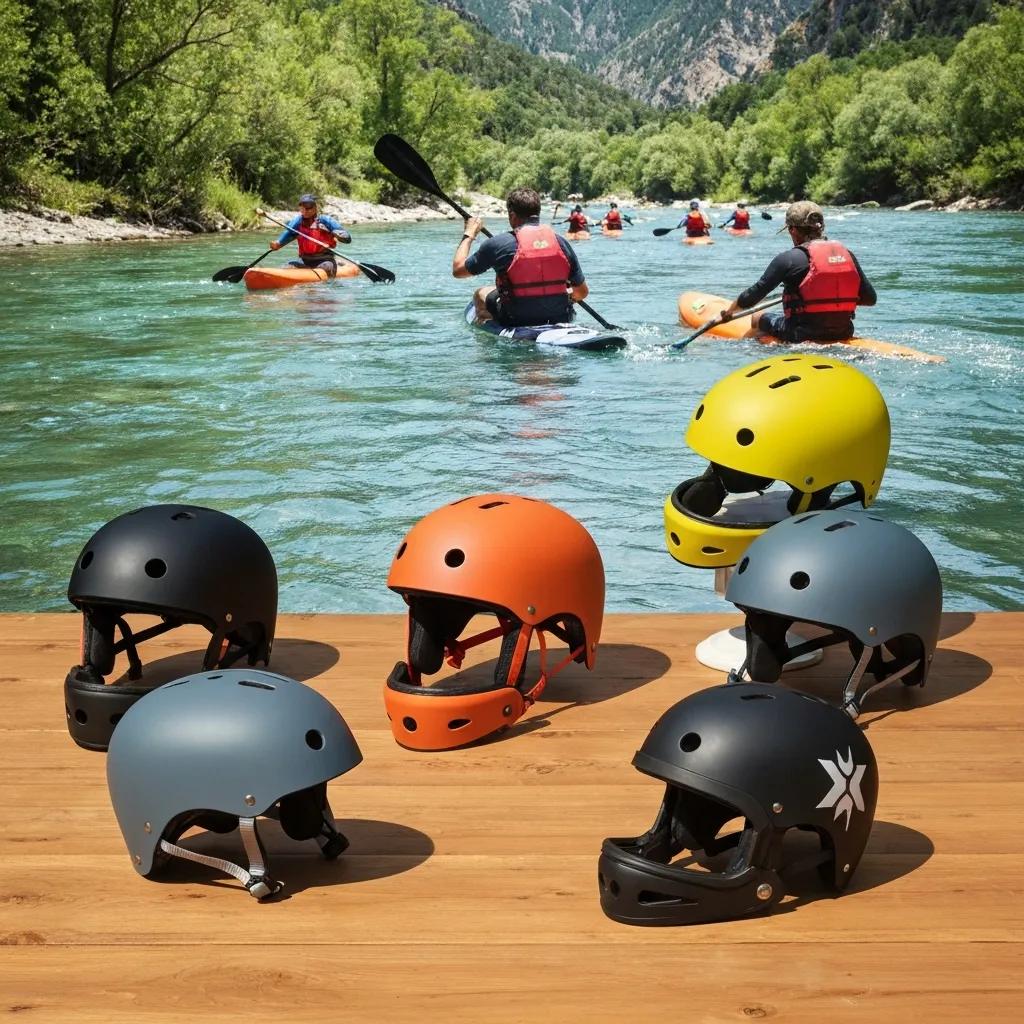
Kayak helmets are commonly offered in half-cut, full-cut, and full-face designs, each with clear trade-offs between protection and mobility. Half-cut models focus on the crown and temples, keeping weight down and peripheral vision open — a good choice for flatwater or easy river runs where awareness and hearing matter. Full-cut helmets increase ear and temple coverage for technical whitewater, giving extra impact protection at the cost of slightly reduced hearing. Full-face designs add chin and jaw protection and are best when face-first impacts or board collisions are likely—think fast surf or extreme whitewater—though they bring extra weight and reduced ventilation. Match coverage to river class, surf conditions, and the contact risks you expect on the water.
What Makes SUP Helmets Unique for Stand-Up Paddleboarding Safety?
SUP helmets prioritize low weight, quick drainage, and a balance-friendly fit so you can stay stable while standing and moving. SUP riders need wide sightlines and fast neck mobility, so SUP helmets tend to be lower-profile with larger drainage ports and retention systems that limit rotation during falls. River SUP and foil SUP call for tougher shells and more ear protection, while flatwater touring favors ventilation and minimal bulk. Pick a SUP helmet based on where you paddle most: rugged coastal surf or foiling justifies a heavier, reinforced shell; calm touring benefits from a light, well-vented design that still offers multi-impact resilience.
Once you've selected the ideal SUP helmet and gear, consider enhancing your experience with expert guidance. Guided paddleboarding tours in the New River Gorge offer a fantastic way to explore, while unique experiences like full moon and sunset paddle board tours provide unforgettable adventures.
Which Key Safety Features Should You Look for in Paddle Sports Helmets?
Good paddle helmets combine a sturdy outer shell, a liner built for multi-impact energy absorption, a dependable retention system, and water-specific features like drainage and buoyancy. Prioritizing those components lowers concussion risk, keeps you comfortable on longer outings, and prevents water from trapping inside after a capsize. Below are the top features to evaluate when comparing models, followed by a compact comparison table that shows what each feature does and why it matters for paddlers.
Helmets often pair materials and design elements to manage both linear and rotational forces; the list below highlights which features matter most when you shop.
Multi-impact liner: Keeps absorbing energy across multiple minor impacts instead of collapsing after one strike.
Secure retention system: A reliable dial-fit and sturdy chin strap stop the helmet from shifting during rolls and collisions.
Drainage and ventilation: Lets water exit quickly and improves comfort and hearing in wet, cold, or splashy conditions.
Using these priorities helps you choose models suited to mixed-use paddling and understand the trade-offs between protection, weight, and fit. The comparison table below is a quick reference for those trade-offs.
Different helmets combine these features in different ways; use the table to match features to the real benefits you need for whitewater, surf, or SUP.
FeatureWhat it DoesBenefit / ExampleMulti-impact liner (EPP/EVA)Absorbs repeated impacts without catastrophic collapseGives better protection across multiple knocks common on whitewater runsRetention system (dial-fit, chin strap)Secures helmet position during rotation and submersionStops the helmet from riding up or exposing temples and browDrainage ports & ventilationAllows rapid water exit and airflowReduces waterlogging and keeps hearing and comfort intactBuoyant shell/floatation designAdds modest positive buoyancy around the headKeeps airways nearer the surface after a capsize; aids recoveryCorrosion-resistant componentsStainless hardware and durable polymer fittingsLasts longer in saltwater and frequent wet use
This side-by-side shows why multi-impact liners and secure retention are baseline requirements, while drainage and buoyancy become priorities depending on the paddling environment.
How Does Multi-Impact Protection Improve Helmet Safety?
Multi-impact protection relies on resilient liner materials — typically EPP foam or denser EVA — that keep absorbing energy after several knocks. EPP flexes and rebounds across multiple impacts, maintaining protection where repeated contacts with rocks or boards are possible. Single-impact liners can crush on a big blow and lose protective capacity, so multi-impact liners are often the wiser choice for whitewater and long sessions with repeated minor strikes. Recent lab testing and independent reviews emphasize helmets with liners rated for repeated impacts to help reduce cumulative head trauma risk on extended river days.
Efficacy of Sports Helmets in Preventing Head Injuries Across Diverse Sporting Disciplines
A broad literature review shows helmets play a key role in preventing and reducing head injuries across many sports. The evidence supports helmet use for averting moderate to severe head trauma and highlights the ongoing need for stronger standards and continued innovation in helmet design.
The type of liner also guides replacement and inspection routines; knowing whether your helmet uses EPP or single-impact foam helps you spot when it’s time to retire the shell after deformation or repeated stress.
Why Are Water Drainage, Ventilation, and Buoyancy Critical in Water Sports Helmets?

Drainage ports and ventilation stop water from pooling inside a helmet, which can muffle hearing, add weight, and create a “mask” after a capsize. Smart drainage channels let water exit quickly while keeping the shell strong where it needs to be. Even small buoyancy features can help keep a paddler’s head nearer the surface after a heavy impact or a long swim, lowering the chance of inhalation in chaotic water. Corrosion-resistant fittings and straps also preserve retention performance over time in salt or fresh water, reducing the risk of unexpected failures.
Grasping how these water-specific features interact will lead to better maintenance and smarter gear choices for the conditions you paddle in. Next, we explain how standards and independent ratings back up manufacturers’ claims.
What Are the Essential Safety Standards and Certifications for Paddle Sports Helmets?
Standards set objective baselines for helmet performance. EN 1385 is the primary European standard for water sports helmets and covers impact absorption, retention strength, and buoyancy. Independent lab ratings — from specialized helmet-testing groups — add useful concussion-related metrics such as linear and rotational acceleration reduction. When you shop, look for clear EN 1385 labeling and, when possible, independent test scores so you can compare models on both compliance and real-world performance. The subsections below explain what EN 1385 tests and how to use lab ratings alongside standards.
What Does the EN 1385 Standard Mean for Water Sports Helmet Safety?
EN 1385 lays out tests for shock absorption, shell integrity, retention pull strength, and buoyancy that are specific to water sports helmets. The standard defines impact thresholds and retention criteria manufacturers must meet to earn certification — a useful baseline for many whitewater situations. But EN 1385 doesn’t cover everything: rotational acceleration and multi-impact resilience may need supplemental evaluation from independent labs. Practical takeaway: favor helmets that meet EN 1385 for whitewater, and consult independent ratings when rotational performance or concussion mitigation is especially important.
Whitewater Helmet Safety: Evaluating Biomechanical Performance and Injury Risk
An estimated six million people take part in whitewater kayaking and rafting annually in the United States, and those activities are associated with roughly 50 annual fatalities. As participation grows, so does the incidence of injuries, including concussions. This study developed a STAR-style rating to assess whitewater helmets’ biomechanical performance and head injury risk.
Knowing the limits of any single standard helps you translate lab data into real-world risk decisions — which brings us to how independent labs measure helmets differently.
How Do Virginia Tech Helmet Lab Ratings Help You Choose Safer Helmets?
Independent programs like the Virginia Tech Helmet Lab measure helmets for how well they reduce linear and rotational accelerations, producing comparative scores that reflect concussion-risk mitigation beyond basic impact tests. Those ratings turn lab results into practical comparisons: higher-rated helmets generally lower peak accelerations more effectively in scenarios similar to collisions or falls. Use lab scores alongside EN 1385: standards confirm baseline compliance, while lab tests reveal relative performance under varied impact vectors. Together they paint a more complete picture for the paddling conditions you expect to face.
Balancing standards and independent ratings helps you choose equipment suited to higher-risk situations like technical whitewater or surf.
How Do You Choose and Fit the Right Paddle Sports Helmet?
Start with an accurate head measurement, match that to a model’s size range, and then adjust the retention system so the helmet won’t rotate or shift. A correctly fitted helmet sits low on the forehead, hugs the crown without pressure points, and is secured by a stable chin strap — improperly fitted helmets won’t protect during rolls or impacts. Below is a simple measurement guide and step-by-step fitting routine to use in-store or to check items you buy online. After fit guidance we cover when to replace a helmet and how to inspect it.
Begin by measuring circumference, then follow the retention steps so the helmet stays put during dynamic paddling.
Measurement StepTool / MethodExpected Result / Fit GuidelineHead circumferenceSoft tape measure around widest part above eyebrowsSize number that matches the brand’s chart; aim for middle of the rangeForehead placement testHelmet sits 1–2 finger-widths above eyebrowsProtects the brow without blocking your viewRoll & tug testApply forward/back rotation and chin-strap tugHelmet should not move more than 1–2 cmRetention adjustmentUse dial-fit or strap-tighten until snugEven pressure around the crown without uncomfortable hot spots
This stepwise guide makes it easy to translate measurement into a secure fit and lists the inspection checks you should do before heading out.
What Is the Best Way to Measure Your Head for a Secure Helmet Fit?
Measure with a soft tape placed about 1 cm above the eyebrows and ears at the widest circumference; measure twice to confirm. Match that number to the helmet brand’s sizing chart — note that sizes vary between makers, so pick a model that places your measurement well within the listed range rather than at the limit. When you try the helmet, seat it low on the forehead and tighten the retention until the shell resists moderate forward and backward motion without causing discomfort. Accurate sizing lowers the chance of returns and increases the odds the helmet will behave properly during a roll or rock strike.
Proper sizing reduces lateral play and tells you when to try a different shell shape for better conformity to your head.
When Should You Replace Your Paddle Sports Helmet for Optimal Safety?
Replace any helmet after a significant impact that visibly deforms the shell or compresses the liner — protective performance can be compromised even if damage looks minor. For multi-impact liners, inspect for subtle compression or cracking; single-impact foam that shows crushing should be replaced immediately. Manufacturers and safety experts commonly recommend inspecting older helmets for UV damage, worn straps, and corroded hardware and replacing them if they’re more than five to ten years old, depending on material and exposure. Regular post-season and post-impact inspections make replacement decisions clearer and safer.
Multi-Impact Helmet Liners: Evaluating Real-World Safety Standards
In real-world accidents helmets are often exposed to multiple impacts. While standards are important for baseline safety, they may not fully capture the complexities of real-world loading conditions.
Keeping a simple log of inspection dates and noting exposure to sun, saltwater, or heavy use helps make helmet lifecycle decisions transparent and defensible.
What Additional Safety Gear Complements Paddle Sports Helmets?

Helmets are one part of a safety system that should also include a properly fitted personal flotation device (PFD), the right leash for SUP, basic rescue gear for kayaks, and a compact first-aid kit tailored to paddling incidents. These items reduce secondary injury, speed rescues, and improve your ability to recover after a capsize. Below is a practical list of essential complementary gear and notes to help prioritize purchases and packing for SUP and kayak outings.
PFD: A correctly sized, activity-appropriate PFD stabilizes the body and supports airway protection.
Leash (SUP): A quick-release or coiled leash keeps your board close while minimizing entanglement risk.
Rescue kit: Throw bag, knife, and bilge pump increase rescue options and reduce time spent exposed in the water.
Choosing complementary gear that works with your helmet creates a more resilient safety setup and prepares you for a range of on-water incidents. The subsections below outline SUP- and kayak-specific priorities.
Which Safety Essentials Should SUP Paddlers Use Alongside Helmets?
SUP riders should combine a helmet with the correct leash, a mobility-friendly PFD or flotation aid suited to standing balance, and signaling tools like a whistle and waterproof comms for remote paddling. Leash selection matters: coiled leashes work well for calm flatwater by reducing drag, while quick-release straight leashes are safer in surf or river sections to avoid entanglement. Pick a PFD that balances flotation with freedom of movement and easy don/doff. Stow signaling and repair items in a dry bag so you’re ready for unexpected gear issues on longer paddle-outs.
Integrating these SUP essentials with helmet use shortens response time after falls and improves recovery options, which dovetails with how kayakers should think about their kits.
What Kayaking Safety Equipment Enhances Injury Prevention Beyond Helmets?
Kayakers benefit from rescue-focused gear such as throw bags, rescue knives, paddle floats, and PFDs rated for swiftwater or sea conditions as appropriate. Throw bags enable shore-based rescues, knives free entanglements, and paddle floats plus bilge pumps speed self-rescue and reduce hypothermia risk. Pair your helmet choice with reliable communication tools and a compact first-aid kit focused on common paddling injuries like lacerations and cold-water care. Practicing rescue drills is just as important as the gear — skill plus kit beats equipment alone.
This gear-first approach highlights that helmets are most effective when they’re part of a practiced, organized safety plan.
What Are the Best Paddle Sports Helmets Recommended for 2025?
Our 2025 recommendations favor helmets that combine durable multi-impact liners, dependable retention systems, and water-ready features tuned to the activity — whitewater, surf, or SUP. Evaluate EN 1385 compliance alongside independent concussion-risk ratings and real-world fit. Below is a concise comparison of representative models organized by best-for use case, price range, and where to buy, followed by short notes on what to look for by discipline. After the picks we include a note on local availability and artisan accessories that pair nicely with helmets.
Across these selections we emphasize sustained protection, reliable drainage, and proven retention for each intended paddling environment.
Helmet Model (Representative)Best for / Key featuresPrice range / Rating / Where to buyModel A (multi-impact shell)Whitewater: EPP liner, strong retentionMid-to-high range; high performance ratings; specialty retailersModel B (lightweight, vented)SUP & touring: low weight, large drainage portsBudget to mid range; comfortable for long trips; common in kayak/SUP shopsModel C (full-face option)Surf/extreme: chin protection, rugged shellPremium; built for surf and high-speed impacts; watersports outfitters
This product snapshot clarifies trade-offs between function, price, and intended use so you can prioritize based on activity and fit.
Which Kayak Helmets Offer Top Ratings for Whitewater Safety?
Leading whitewater helmets combine multi-impact EPP liners with reinforced shells and retention systems that resist rotational and translational movement during violent rolls or rock strikes. When shopping, prioritize models with documented lab ratings for impact reduction and solid ear and temple coverage. Fit and comfort matter — you’ll wear the helmet for long, active days — so choose shells that stay put without creating pressure points. Use independent ratings to compare concussion-risk metrics and always perform a roll-and-tug fit test to confirm real-world stability.
The best whitewater helmets balance robust protection with manageable weight so you can wear them all day without fatigue.
What Are the Best SUP Helmets for River and Flatwater Paddling?
For SUP river runs, look for helmets with tougher shells, good ear protection, and reliable drainage; for flatwater touring, favor lightweight, well-vented designs that limit heat buildup and preserve hearing. Value models often cover the basics — adequate drainage and comfortable retention — while premium SUP helmets add advanced liners or reinforced shells for occasional river use. If you switch between flatwater and river conditions regularly, consider a slightly more protective, well-ventilated helmet that covers both without swapping gear every outing.
Choosing a SUP helmet is about balancing likely hazards against comfort for the duration and style of your paddles.
Mountain Surf Paddle Sports aims to showcase and sell handmade goods that complement helmet purchases. Local shoppers and visitors will find curated artisan paddler gifts and helmet accessories at community-focused retailers and craft markets. For a broader range of adventures, including other exciting activities like paintball, visit their main site at mtnsurfps.com. Handcrafted helmet storage bags, custom covers, and practical accessories make thoughtful gifts and useful additions to any paddling kit.

Our Customers Say About Us


It is a long established fact that a reader will be distracted by the readable content of a page when looking at its layout. The point of using Lorem Ipsum is that it has a more-or-less normal distribution of letters, as opposed to using ‘Content here, content here’, making it look like readable English.
It is a long established fact that a reader will be distracted by the readable content of a page when looking at its layout. The point of using Lorem Ipsum is that it has a more-or-less normal distribution of letters, as opposed to using ‘Content here, content here’, making it look like readable English.
Questions?
Get in touch with our team.
304-470-SURF

Quick Links
© Copyright 2026. Mountain Surf Paddle Sports. All rights reserved.