
Blogs

Stand Up Paddle Boards Safety Tips
Stand‑Up Paddleboard Safety: Your Essential Guide for Confident, Safe Outings
Safe paddleboarding starts before you step on the board: knowing the hazards, picking the right equipment, and rehearsing rescue and group routines until they’re second nature. This guide explains why a USCG‑approved Personal Flotation Device and the correct leash matter, how weather and water conditions change your risk, and which beginner skills stop common problems before they start. Many new paddlers underestimate cold‑water shock, currents, and entanglement — here you’ll find clear thresholds, step‑by‑step self‑rescue methods, and local tips for paddling around Fayetteville, the New River Gorge, and Summersville Lake. We include equipment checklists, easy comparison tables for PFDs and leashes, wind and water temperature go/no‑go guidance, a first‑time paddler checklist, and group emergency procedures so you can plan outings with confidence. Read on to learn practical safety steps, basic gear care, and where guided instruction and rentals can help you build safe habits on local waters.
What Are the Essential Safety Gear Items for Stand Up Paddleboarding?
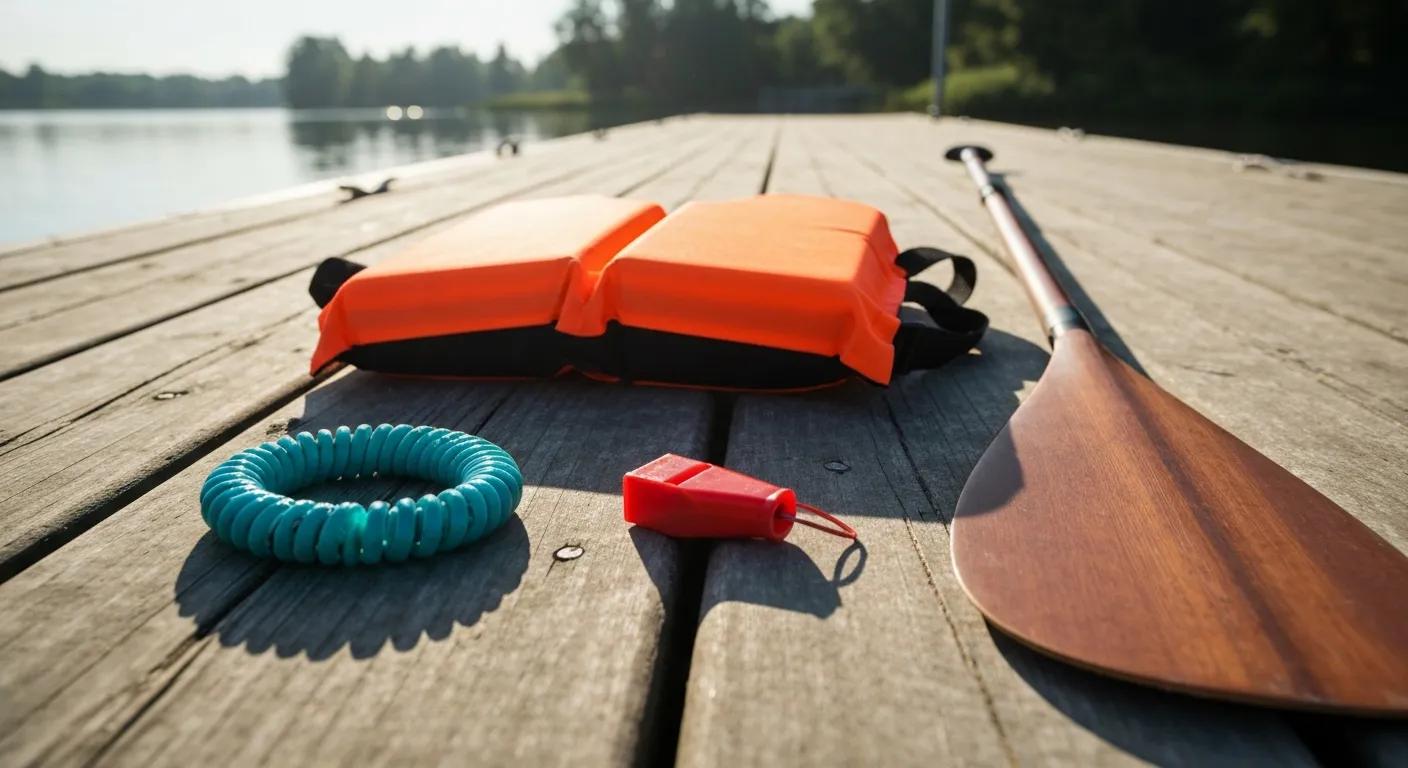
Good safety gear reduces risk by keeping you buoyant, attached to your board, and able to call for help if needed. A properly fitted Personal Flotation Device (PFD) supports you if you get tired or separated from the board; a leash keeps the board close so you’re not swimming after it. Signaling tools — a whistle or a waterproof comms device — speed rescue, and the right clothing lowers immersion and cold‑shock risk. Don’t forget sun protection, a dependable paddle, and water: together these items form a simple, layered approach to safer recreational paddling.
Why Is a USCG-Approved Personal Flotation Device Crucial for SUP Safety?
A USCG‑approved PFD delivers predictable buoyancy and is built to keep an unconscious paddler’s airway clear — that standardized performance matters. Pick the right style and fit for your activity: for most recreational outings a Type III PFD gives flotation while allowing freedom of movement. Check the fit by tightening the shoulders so the PFD doesn’t ride up, making sure you can breathe comfortably while sitting or standing on the board. Knowing PFD types and fit helps you choose complementary gear — leash style and signaling tools — so your whole setup works together for a safe trip.
A quick comparison table below helps you match PFDs and leashes to water types and paddler needs.
Gear ItemKey Specification / FitRecommended Use & NotesType III PFDUSCG‑approved, close fit, designed for mobilityBest for lakes and calm rivers; easy to paddle in and supports re‑entryInflatable Belt PFDCompact — manual or CO2 inflationLow profile for experienced paddlers; needs regular maintenance and checksChild/Youth PFDSized by chest measurement, high‑visibility colorsRequired for young paddlers; ensure a snug fit that still allows arm movementCoiled Ankle LeashElastic coil, attaches at ankleGreat for flatwater and lakes — keeps cord off the water and reduces entanglementQuick‑Release Waist LeashWaist‑mounted with an emergency releasePreferred on rivers and moving water where snagging and strong currents are hazards
Use this table to match a PFD and leash to the water you’ll be on, your mobility needs, and available rescue options. The next section breaks leash types down in more detail and when to pick each one.
How Do Different Types of SUP Leashes Enhance Safety on Water?
Leash design affects how the board behaves when you fall and how quickly you get back on. Knowing the differences — coiled, straight, and quick‑release waist leashes — helps you choose safely. A coiled leash keeps slack off the water on lakes, cutting drag and trip hazards. A straight ankle leash can help in surf for board control but raises entanglement risk in currents. Waist‑mounted quick‑release leashes are the safer choice on rivers: they free you fast if you snag on an obstacle and reduce the chance of being pinned between board and current. Practice using a quick‑release on land before you launch and inspect attachment points regularly; later sections cover how weather, self‑rescue, and group protocols pair with leash choice.
If you’d rather rent than buy, consider local on‑site options for compliant gear and hands‑on instruction. Mountain Surf Paddle Sports in Fayetteville, WV, rents quality boards, paddles, and USCG‑compliant PFDs and includes on‑land briefings, fitting checks, and rescue demos. Renting locally is a good way to make sure your equipment matches New River Gorge and Summersville Lake conditions and to get quick advice from people who know the area.
How Do Weather and Water Conditions Impact Paddleboard Safety?
Wind, water temperature, currents, and visibility all change how hard it is to control your board, how quickly you cool if you go in, and how easy a rescue might be. Wind creates chop and can make returning difficult; cold water increases immersion risk and may call for a wetsuit or drysuit. River features affect route choices and exits, and poor visibility or thunderstorms are immediate no‑go signals. Check national forecasts and local conditions before launch and choose routes with multiple exits so you’re not caught out by changing weather.
What Weather Conditions Should Paddlers Monitor Before Going Out?
Keep an eye on wind speed and direction, sudden gusts, precipitation and thunderstorm warnings, and visibility. Each of these alters your safety margin on the water.
As a rule of thumb, sustained winds above about 15–20 mph make conditions challenging for beginners on exposed lakes and rivers; gusty or shifting winds can be problematic even at lower speeds. Fog or heavy rain reduce visibility and complicate rescue — that’s usually a clear sign to wait it out. Identify sheltered launches and short routes as backup plans when forecasts show wind or storms.
The table below maps common conditions to safe thresholds and practical clothing guidance.
ConditionSafe Threshold / IndicatorRecommendationWind Speed< 10–15 mph for beginners; 15–20+ mph proceed with cautionPick sheltered routes or postpone if winds are gusty or sustained above thresholdsWater Temperature> 60°F lower immersion risk; < 60°F raises cold‑shock concernsUse a wetsuit for cool water; consider a drysuit in very cold conditionsCurrent StrengthWeak or eddy‑dominated is best for beginners; strong currents need experienceAvoid strong currents; plan exits and use a quick‑release leash on moving water
If any condition exceeds these thresholds, prefer short routes, protected launch sites, or reschedule. The next section covers cold‑water immersion and how to reduce cold‑shock risk.
How Can You Safely Paddleboard in Cold Water and Avoid Cold Water Shock?
Cold‑water shock is a fast, involuntary response to sudden immersion that can overwhelm even good swimmers. Prevent it by dressing for immersion and reducing the chance of surprise falls. Wear a wetsuit or drysuit suited to the water temperature, and add neoprene gloves or booties when needed to preserve dexterity for self‑rescue. Keep your PFD on, control your breathing after a fall, and use the board as a stable re‑entry platform. Paddle with a buddy in cold conditions, carry a waterproof communication device, and plan speedy exits to warm clothing to lower hypothermia risk after immersion.
What Are the Key Safety Techniques and Rules for Beginner Paddleboarders?
Good basics — a stable stance, controlled strokes, safe falling technique, and constant situational awareness — cut incidents by improving balance and reactions on the water. A solid pre‑launch routine checks equipment and conditions; practicing falling and re‑entry on land builds calm, effective responses in the water. Follow navigation etiquette — yield to larger vessels, keep distance from swimmers and rocks — and teach the fundamentals on land before moving into sheltered water to build skills safely and quickly.
What Is the First-Time Paddler Safety Checklist?
Use a simple, numbered pre‑launch checklist to reduce stress and human error. This routine covers equipment, environment, and communications so you leave the shore with a clear plan. Run through the list every time until it’s automatic.
Check PFD fit and fasten all straps snugly before leaving shore.
Verify leash attachment and practice the quick‑release if you’re using a waist leash.
Inspect board, paddle, and fin; confirm inflatable valves are closed and secure.
Confirm your route, wind direction, nearest exits, and an emergency contact who knows your plan.
Carry a whistle and a waterproof communication device; bring sun protection and drinking water.
Following this checklist reduces adrenaline‑driven mistakes; practicing each step on land turns it into a reliable habit that supports calm self‑rescue when needed.
Below is a compact EAV table mapping core techniques to actions you can rehearse.
TechniqueAttributeRecommended ActionFallingBody position and directionFall away from the board, protect your head with your arms, and exhale to steady breathingRe‑entryBoard approachApproach from the side, pull up to the centerline, kick and slide forward to regain balanceSelf‑rescueUsing leash and PFDKeep your PFD on, bring the board close with the leash, steady it as a platform and use the paddle for leverage
Rehearse these actions during on‑land briefings or guided sessions. Once you’ve learned the basics, hands‑on instruction accelerates safe progress; guided tours and shore‑side coaching are especially valuable for first‑timers.
Many new paddlers shorten the learning curve through guided instruction. Mountain Surf Paddle Sports runs guided tours with on‑land introductions that cover falling, re‑entry, and route selection in controlled conditions. These sessions combine demonstration with real‑time coaching on balance, stroke technique, and emergency drills so participants leave more confident and better prepared. Guided instruction is especially useful on local waters like the New River Gorge where flow and access points differ from flatwater spots.
What Local Rules and Regulations Govern Stand Up Paddleboarding in the New River Gorge?
Local and national rules shape safe, lawful paddling: US Coast Guard standards set baseline equipment expectations, while park and local rules control access, launch sites, and seasonal protections in the New River Gorge. Knowing both layers helps you follow mandatory equipment rules and respect advisories or restricted zones. Local knowledge — recommended launches, commercial traffic corridors, and private property boundaries — reduces conflicts and guides you to safer routes with known exits. When unsure, consult local outfitters or consider a guided trip to remove uncertainty from your planning.
What Are the US Coast Guard Requirements for SUP Safety Gear?
The USCG requires that each person aboard a vessel — including paddlecraft — have an appropriate wearable PFD available, and that certain signaling equipment be carried depending on operation and waterway. While local rules can vary, having a whistle and a properly fitted PFD for every paddler is a consistent baseline. Beyond required items, prudent paddlers carry waterproof communications and extra signaling tools to improve rescue chances. Mountain Surf aligns its rental fleet and instructor checklists with USCG standards so rental gear meets recognized safety baselines for various specialized recreational outings like full moon paddles.
How Do New River Gorge-Specific Regulations Affect Paddleboard Safety?
New River Gorge National Park and local authorities may post seasonal advisories, launch restrictions, or rules to protect wildlife and manage outfitters; check local guidance before you arrive. Launch and exit points vary: some offer easy put‑ins with multiple exits, others require scouting for currents and submerged hazards. Watch for commercial traffic and guided trip corridors and obey posted signs or temporary closures that protect both safety and habitat. If you don’t know the area, ask a local outfitter or choose a guided operator to pick safe launch sites and explain seasonal advisories. Mountain Surf Paddle Sports keeps current with local rules and common launch points, offering unique experiences like sunset paddle board tours; consulting their guides helps unfamiliar paddlers choose safe routes and understand seasonal updates for the region.
How Can Group Paddleboarding and Emergency Protocols Improve Safety?

Group paddling adds safety when teams use clear communication, assign roles, and rehearse emergency procedures before launching. Simple hand signals, a designated leader and sweep, and agreed pacing help groups stay together and respond quickly to incidents. Carry redundant communication devices and practice rendezvous and evacuation routes so members aren’t left isolated. Planning for multiple exits and safety buffers gives groups flexibility if conditions change.
What Communication Devices and Signals Are Essential for Group SUP Safety?
Groups should carry basic signaling and comms tools: a whistle for immediate attention, waterproof phones or VHF radios for longer‑range contact, and simple visual signals for direction and stops. Agree on hand signals like “stop,” “come here,” and “help” so you can communicate without shouting over wind or waves. Redundancy matters: include at least two communication options per group so a single device failure doesn’t isolate anyone. Practice signals and device use during a pre‑trip brief so responses are calm and coordinated in an emergency.
Recommended minimum group kit includes:
A whistle carried by each paddler.
One waterproof phone or two VHF‑capable devices per group.
A visible float or flag for low‑visibility conditions.
These basics, plus pre‑trip practice, make it much easier to coordinate help quickly; the section below summarizes emergency procedures groups should rehearse.
What Are the Recommended Emergency Procedures for SUP Groups?
A concise, practiced emergency protocol improves outcomes: stop paddling, account for everyone, deploy signaling, and move to the safest nearby exit while contacting emergency services if needed. If someone is missing, conduct a quick circular search while one or two paddlers secure gear; if there’s an injury, stabilize the person on a board if it’s safe and execute a controlled evacuation to shore. Assign roles before launch — leader, tail guard, communications officer — so tasks have owners when stress rises. Run these scenarios in guided drills so real incidents are managed with calm, practiced actions instead of improvisation.
Mountain Surf models these best practices on guided trips by assigning guide roles, carrying multiple comms devices, and rehearsing emergency procedures during outings; these field‑tested processes show how group discipline and equipment redundancy reduce risk on the river. See more on their other activities, including options like paintball.
How Should You Maintain SUP Equipment to Ensure Ongoing Safety?
Regular inspection and maintenance catch problems before they become hazards and extend gear life. Pre‑ and post‑trip checks should cover fins, leash attachments, board surface, and PFD straps; spotting leaks, frayed cords, or weakened buckles early prevents failures on the water. Store gear out of prolonged UV and extreme heat, and have professional inspections for deep dings or seam issues. A routine maintenance schedule reduces emergency repairs and keeps rental fleets reliable if you use shared equipment.
What Are Best Practices for Inspecting and Maintaining Your Paddleboard and Gear?
Inspect gear after every outing using a checklist so inspections stay consistent. For inflatables check valve seals and seams; for hard boards look for hull dings and secure fin boxes; for leashes check attachment points and cord wear; for PFDs inspect stitching, buckles, and flotation material. Rinse off salt or freshwater, dry gear fully before storage, and schedule monthly deeper checks or professional repairs for serious damage. Keeping a simple maintenance log helps you track repairs and replacements so your gear is ready when you need it.
How Does Proper Equipment Maintenance Prevent Safety Hazards?
Routine maintenance removes common failure points that can turn into emergencies: replacing a frayed leash or resealing an inflatable seam prevents a lost board or sudden deflation. The small time and cost of upkeep are minor compared with the risk and expense of rescue or injury. Rental operators and guides follow maintenance protocols to make sure every trip starts with gear that meets safety expectations and reduces preventable incidents on shared waterways.
Frequently Asked Questions
1. What should I do if I fall off my paddleboard?
If you fall, stay calm and control your breathing. Keep your PFD on and swim to the board, using it as a stable platform. Approach from the side, pull yourself onto the centerline, and kick while sliding forward to regain balance. In cold water, focus on steady breathing to avoid panic and move quickly to warm gear. Practicing this on land helps make the motion automatic on the water.
2. How can I prepare for unexpected weather changes while paddleboarding?
Always check the forecast before you go and keep an eye on the sky while paddling. Carry a waterproof comms device and have mapped contingency routes and quick exits. Know local weather patterns and be ready to head in if wind or clouds build. Quick decisions and a preplanned exit are the simplest ways to stay safe when conditions change.
3. What are the benefits of taking a guided paddleboarding tour?
Guided tours are great for beginners: they include safety instruction, gear checks, local knowledge, and hands‑on coaching. Guides help you read the water, avoid hazards, and practice rescue drills in a controlled setting. Tours remove the prep stress and give you confidence while you learn — a fast, safe way to get started.
4. How can I improve my balance on a paddleboard?
Build core strength with yoga or Pilates and practice on calm water. Keep a low center of gravity by bending your knees slightly, use the paddle for stability, and shift weight smoothly from side to side. Frequent short sessions in sheltered conditions are the best way to improve steadily.
5. What should I do if I encounter wildlife while paddleboarding?
Give wildlife plenty of space and avoid sudden movements. Observe quietly and communicate with your group so everyone stays aware. Do not feed or touch animals — follow local guidelines to protect both you and the wildlife.
6. Are there specific paddleboarding techniques for navigating rivers?
Rivers need different skills: scout conditions before you launch, choose a safe route, and keep a low stance with steady strokes. Angle your board to deflect off obstacles rather than hitting them head‑on, and learn to use eddies and currents to your advantage. Practicing quick turns and reading river features improves safety and control.
7. How can I ensure my paddleboard is safe for use?
Inspect your board before and after every outing for dings, cracks, or leaks — especially on inflatables. Make sure your PFD and leash are in good condition and fit properly. Rinse and dry gear after use and store it out of direct sun. A regular maintenance routine extends gear life and keeps you safer on the water.

Our Customers Say About Us


It is a long established fact that a reader will be distracted by the readable content of a page when looking at its layout. The point of using Lorem Ipsum is that it has a more-or-less normal distribution of letters, as opposed to using ‘Content here, content here’, making it look like readable English.
It is a long established fact that a reader will be distracted by the readable content of a page when looking at its layout. The point of using Lorem Ipsum is that it has a more-or-less normal distribution of letters, as opposed to using ‘Content here, content here’, making it look like readable English.
Questions?
Get in touch with our team.
304-470-SURF

Quick Links
© Copyright 2026. Mountain Surf Paddle Sports. All rights reserved.