
Blogs

Best Places to Stand Up Paddle Board in West Virginia
Best Places to Stand Up Paddle Board in West Virginia — Top Spots, Rentals, and Guided Tours
West Virginia packs more paddleboarding variety than you might expect — from wide, glassy lakes to tucked-away river gorges and dramatic falls. This guide walks you through the best places to SUP in the state (think New River Gorge, Summersville Lake, and Kanawha Falls), what to expect at each site, and how to plan rentals or guided trips so you pick the right day on the water. We cover access points, safety essentials, rental logistics, and quick gear checklists tailored for local conditions. You’ll also find which spots are best for families, photographers, or advanced paddlers, plus short timing and seasonal tips to get the most out of your outing. Keep reading to find top paddleboard locations, rental and guide options, safety notes for currents and falls, and how to reserve a trip around the New River Gorge.
Mountain Surf Paddle Sports is a Fayetteville-based outdoor outfitter and local resource for paddleboard rentals, guided SUP tours (including Full Moon and Sunset trips), and retail gear. We focus on experienced local guides, well-maintained equipment, and guided outings that include complimentary photos — all tailored to New River Gorge activities and skill levels from beginner to advanced. Use the location-first advice below to pick a spot, then consider Mountain Surf Paddle Sports if you want someone local to handle logistics, instruction, and photos. From here, this guide digs into each location’s features, access details, gear needs, and safety steps so you can plan a confident SUP adventure.
Where Are the Best Paddleboarding Spots in West Virginia?
Three spots consistently stand out for paddleboarding in West Virginia: New River Gorge for scenic river runs, Summersville Lake for clear flatwater and cliff views, and Kanawha Falls for waterfall-adjacent paddling with technical elements. Together they show the range of SUP in the state — from calm family-friendly bays to moving-water routes that test technique. Knowing what each place offers helps you match conditions to skill level, pick the best photo ops, and arrange parking and logistics. Below is a quick summary to help you decide where to plan your next SUP trip.
If you’re after a different kind of group adventure, Mountain Surf Paddle Sports also runs paintball events that are great for teams and groups looking for something off the water.
Top West Virginia paddleboard spots and what they’re known for:
New River Gorge: Scenic canyon paddling with protected eddies, bridges, and lots of photo opportunities — ideal for intermediate paddlers and sightseers.
Summersville Lake: Clear, open flatwater and cliff-lined bays that work perfectly for Sunset and Full Moon tours, families, and calm-water cruising.
Kanawha Falls: Striking waterfall scenery and variable currents — suited to experienced paddlers or guided expeditions that route around hazards.
This quick comparison highlights how scenery, water type, and access differ so you can prioritize safety and experience when choosing a destination. The table below makes it easy to weigh “best for” against key features and pick the location that fits your goals.
LocationBest ForKey FeaturesNew River GorgeScenic river routes & photographyCanyon views, calm eddies, multiple access points near FayettevilleSummersville LakeClear-water flatwater & specialty toursWide bays, dramatic cliffs, perfect for Sunset and Full Moon paddlesKanawha FallsAdventurous paddlers seeking dramatic sceneryWaterfall overlooks, changing currents, careful route planning required
This table condenses each spot’s main appeal so you can quickly match a location to your skill level and trip expectations. Below we dive into what makes each place unique and how to stay safe while paddling.
What Makes New River Gorge Ideal for Stand Up Paddle Boarding?
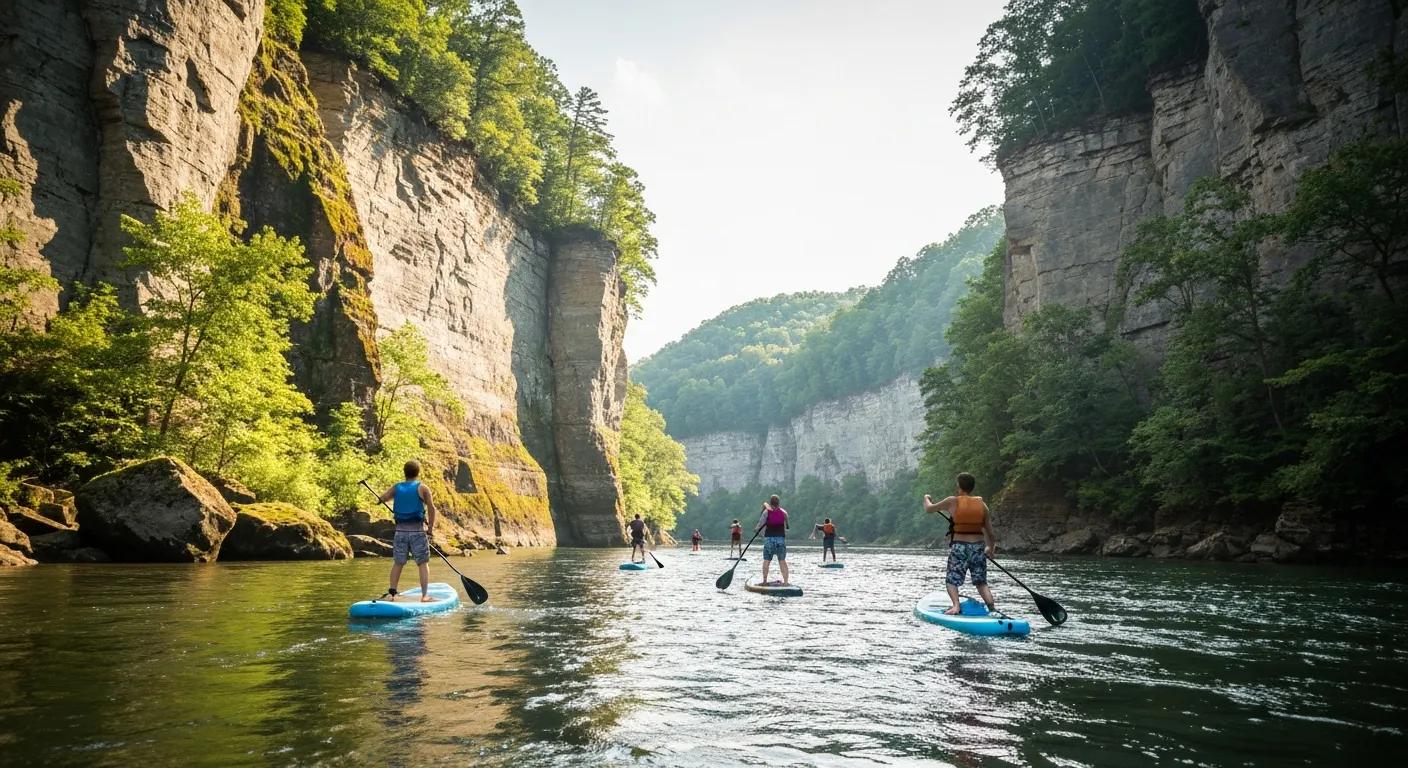
The New River Gorge mixes long scenic stretches with protected eddies and friendly put-in spots, making it a top choice for varied paddling trips. Towering sandstone walls and abundant wildlife create excellent photo opportunities, while the river itself offers both calm flats for relaxed touring and moving water that challenges intermediate paddlers. Local access points around Fayetteville make logistics straightforward, and guided SUP tours can steer you into the most sheltered, scenic sections. If you paddle here, pay attention to changing currents and pick stretches that match your comfort level — local route knowledge pays off.
Why Choose Summersville Lake for Paddleboarding Adventures?
Summersville Lake is a go-to for clear, stable flatwater framed by dramatic cliffs — conditions that suit families, lessons, and specialty tours like Sunset outings and Full Moon paddles. Sheltered coves tame wind chop and make learning easier, while ramps and quiet inlets provide simple access. The cliffs create memorable silhouettes at dusk and reflective light for night paddles, but be mindful of cliff safety and boat traffic near busy ramps. Aim to launch when winds are low for the smoothest experience.
How Can You Access Paddleboard Rentals and Guided Tours in West Virginia?
Getting a board and a guide in West Virginia usually means booking ahead, meeting at a designated launch (Fayetteville or Summersville are common), and getting a short on-site orientation about local conditions and safety. Outfitters include the basics — board, paddle, and PFD — while guided trips add route selection and photos. Book early in peak season to secure the board size and guide ratio you want, and keep group sizes moderate to enhance safety and fun on the water. Here are simple steps to set up rentals or guided trips with confidence.
How to secure rentals or tours in practical steps:
Book early online or by phone to lock in dates and preferred board types, especially on weekends and holidays.
Confirm the meeting point and launch logistics so you know where to park and what to expect on arrival.
Check what’s included in the rental or tour (boards, PFDs, photos) and pack any personal items like footwear, sunscreen, and water.
Once those items are arranged, you’ll be ready to pick up gear or meet your guide and head out with clear expectations about timing and equipment. The next section lists rental options around New River Gorge and Summersville Lake and what to expect from a local outfitter.
Where to Rent Paddleboards in New River Gorge and Summersville Lake?
Local outfitters near New River Gorge and Summersville Lake typically offer meet-up rentals that include boards, paddles, and PFDs plus a brief orientation at the launch. Mountain Surf Paddle Sports operates from Fayetteville and is a hometown option for rentals, guided trips, and specialty Sunset or Full Moon tours — we bring experienced guides, high-quality gear, and often complimentary photos on guided outings. When renting, confirm board size, leash and fin condition, and whether the rate covers transportation or a specific meet point like a boat ramp. Inspect equipment at pickup, ask about current weather or water advisories, and request a short skills refresher if you haven’t stood on a board in a while.
What Are the Benefits of Guided Paddleboard Tours in West Virginia?
Guided paddleboard tours take the guesswork out of planning: guides provide safety oversight, local route knowledge, and convenient logistics so you can focus on the scenery. Guides read water behavior, pick sheltered lines when conditions shift, and deliver hands-on instruction that helps beginners gain confidence fast. Many guided trips include extras like photos and equipment setup, so you spend more time paddling and less time fiddling with gear. For families, newcomers, or visitors short on time, guided tours are a stress-free way to get the most from your outing.
Benefits of guided tours in list form:
Safety and instruction: Guides teach paddling fundamentals and monitor conditions for safer outings.
Local knowledge: Guides pick the most scenic and sheltered routes based on current conditions.
Convenience and extras: Tours often include gear setup, logistics, and photos to capture the trip.
These perks make guided trips a great choice for first-timers and anyone who wants to maximize time on the water without worrying about route planning.
What Are the Unique Features of Kanawha Falls for Paddleboarding?
Kanawha Falls stands out because it pairs waterfall views with technical water features that make paddling both challenging and visually rewarding. Currents, eddies, and flow vary with the season, so paddlers need to read the water carefully and plan entry and exit points in advance. Kanawha Falls is best for paddlers who understand river dynamics or who join guided expeditions that route around hazards and show safe viewing spots. Expect limited launch space in places and be prepared to portage or use established access points to protect the shoreline.
How to Safely Explore Kanawha Falls by Paddleboard?
Safe exploration at Kanawha Falls starts with an honest skill check, solid safety gear, and careful route choice. Wear a high-quality PFD, use a tethered leash, and consider protective footwear for rocky shorelines. Scout put-in spots from shore, obey local rules about waterfall approaches, and avoid unknown channels or submerged hazards. If you’re less experienced, choose a guided trip so a guide can manage sightlines and coach you through currents. Keep communication clear within your group and carry a whistle or other signaling device in case you need help.
What Makes Kanawha Falls a Distinct Paddleboarding Destination?

Kanawha Falls’ mix of waterfall scenery, shifting currents, and quieter access makes it a special destination for paddlers seeking solitude and technical lines. Unlike open lakes, the Falls reward river-reading, patience to catch low-flow windows, and an appetite for off-the-beaten-path exploration. Wildlife and unique rock formations add to the experience, and early mornings usually offer calmer water and softer light for photos. Plan visits during stable weather and consider guided runs if you’re unsure about river conditions.
How to Choose the Best Paddleboarding Experience in West Virginia?
Picking the right SUP experience comes down to matching skill level, group makeup, and the scenery you want. Do you want calm flatwater for a family day, scenic river stretches for photo ops and a mild challenge, or waterfall-adjacent routes that demand stronger technical skills? Also decide whether you want a guided outing — which reduces planning and adds local expertise — or a rental for independent exploration. Use the checklist below to narrow your options quickly.
Decision checklist for choosing a SUP experience:
Match your skill level to the location: calm lake for beginners, gorge or river for intermediates, falls for experienced paddlers.
Consider group composition and ages — families do best with shorter routes and calmer water.
Choose guided tours for instruction and logistics or rentals for flexibility and solo exploration.
Following this framework helps you pick the right mix of spot, gear, and support for a successful outing. The sections that follow point out beginner-friendly sites and explain how Sunset and Full Moon tours differ.
Which Paddleboarding Spots Are Best for Beginners and Families?
Beginners and families will feel most comfortable in sheltered coves and wide, calm bays — think Summersville Lake or protected eddies on the New River Gorge. These areas offer gentle water, predictable conditions, easy launch points with parking, and shallow entries that are kid-friendly. When paddling with children, keep groups small, use properly fitted child PFDs, and plan short routes with frequent rest stops. Taking an instructional lesson or joining a guided family tour speeds up confidence and ensures everyone understands basic paddle technique and on-water safety.
What Are the Differences Between Sunset and Full Moon Paddleboard Tours?
Sunset and Full Moon tours share the magic of being on the water during special light, but they differ in timing and safety needs. Sunset tours run in late afternoon and often finish as daylight fades — great for warm evening colors and calmer winds. Full Moon tours happen after dark and rely on lunar illumination, so organizers add extra lighting, reflective gear, and tighter buddy systems to stay visible. In both cases, guides pick sheltered launch spots and monitor weather and wind to keep trips safe and enjoyable.
What Gear and Safety Tips Should You Know for Paddleboarding in West Virginia?
Key gear and safety basics for WV paddling include a well-fitting PFD, a leash, the right board for conditions, sun protection, and awareness of local water behavior. Different locations call for different precautions: colder river water raises hypothermia risk in shoulder seasons, while lake outings demand attention to wind and boat traffic. Before you launch, check board integrity, fin and leash attachments, and PFD fit, and brief your group on exit points and emergency steps. The table below shows common equipment, whether Mountain Surf typically provides it, and why each item matters for safe SUP trips in the region.
Intro to table of equipment and provider details:
EquipmentProvided By Mountain Surf?Why It MattersPaddleboardYesThe right board size improves stability and control for every skill levelPaddleYesA correctly sized paddle boosts efficiency and reduces fatiguePFD (Personal Flotation Device)YesRequired safety gear that keeps paddlers afloat in an emergencyLeashYesKeeps your board nearby if you fall, preventing separation and driftDry bag / photosOften included on guided toursProtects essentials and gives you trip memories
This breakdown shows what to expect from rentals and why each item matters for safe SUP outings in West Virginia. The next section explains the specific equipment Mountain Surf supplies and how it matches different paddler needs.
What Paddleboarding Equipment Does Mountain Surf Paddle Sports Provide?
Mountain Surf Paddle Sports supplies the essentials for safe rentals and guided tours — boards, paddles, PFDs, leashes, and complimentary photos on many guided trips — so participants arrive with reliable gear suited to New River Gorge and Summersville Lake conditions. We choose boards that favor stability for beginners and performance models for experienced paddlers, letting guides match equipment to ability and route. When you book, ask about board brands and models, confirm included accessories, and request optional items like footwear or spray protection if conditions call for them. That way you only need to bring personal items: sun protection, a layer for changing temperatures, and a small dry bag for valuables.
What Are Essential Safety Guidelines for West Virginia Paddleboarding?
Essential safety practices include wearing a PFD at all times, checking wind and weather before you go, knowing local currents and boat traffic patterns, and using a leash suited to your board and conditions. In gorges and near falls, scout entry and exit points from shore and avoid unknown channels or submerged obstacles. On lakes, watch for wind-driven chop and keep distance from motorboats. Carry a simple communication plan — a whistle and phone in a waterproof case — and paddle with a buddy or under a guided program if you’re unfamiliar with the area. Following these basics reduces risk and keeps the focus on exploring and enjoying the scenery.
How to Plan and Book Your Stand Up Paddleboarding Adventure in West Virginia?
Planning a SUP outing involves choosing the right location and tour type, checking seasonal and daily conditions, reserving boards or guided spots ahead of time, and packing a compact gear-and-logistics checklist for the day. Consider weather, wind, and water temperature when you pick dates — spring and fall often mean cooler water and fewer crowds; summer brings warmer water but busier ramps. Book Sunset or Full Moon tours early in peak months and tell your outfitter your group size and experience level so they can match gear and staffing. The table below compares common tour types to help you choose.
Tour comparison table for booking:
Tour TypeDurationBest Time of Day/ConditionsSunset Tour1.5–2 hoursEvening light, typically calmer late-afternoon windsFull Moon Tour1.5–2.5 hoursNighttime with lunar illumination; requires stable weatherStandard Guided Tour2–3 hoursMorning or early afternoon in moderate conditions
This comparison helps you match tour type to your schedule and conditions. Follow the booking steps below to complete your reservation and prepare for the water.
How to Book Guided Tours and Rentals with Mountain Surf Paddle Sports?
To book with Mountain Surf Paddle Sports, contact our Fayetteville base by phone or email and tell us your preferred dates, group size, and experience level so we can recommend the right tour or rental package. Share details like participant count, your preferred tour type (Sunset, Full Moon, or standard guided), and any special needs so we can plan gear and staffing. Book early during peak season, confirm the meeting point and arrival time on the day of your trip, ask about cancellation and weather policies, and arrive ready with layered clothing and sun protection. Clear communication with the outfitter ensures a smooth check-in, proper gear fitting, and a guided experience tuned to local water conditions.
What Are the Best Times and Conditions for Paddleboarding in West Virginia?
The best times to paddle in West Virginia are typically late spring through early fall when water temps are warmer and weather is more stable. Early mornings and late afternoons often bring calmer winds and prettier light for photos. Watch daily wind forecasts — sustained winds above about 10–12 mph can make lake paddling tough — and avoid sudden temperature drops that raise hypothermia risk in rivers or shaded gorges. Book Sunset tours for golden-hour light and Full Moon trips when the lunar schedule gives enough illumination for safe night paddling. Planning around weather windows and daylight makes for safer, more enjoyable SUP trips.
Packing tip: Bring layers, a waterproof case for electronics, and a refillable water bottle.
Timing tip: Aim for mornings to avoid afternoon lake winds and to catch calmer river conditions.
Safety tip: Always check recent local advisories or call your outfitter for last-minute condition updates.
These planning and booking steps, combined with the location-specific tips above, will help you confidently organize a paddleboarding trip that fits your goals and ability level in West Virginia.
Frequently Asked Questions
What should I wear while paddleboarding in West Virginia?
Wear clothing that moves with you and dries quickly — synthetic layers or swimwear work well. A properly fitted PFD is mandatory, and a leash is recommended so your board stays nearby if you fall. In colder months consider a wetsuit or layers for water protection. Don’t forget sun protection: sunscreen, sunglasses, and a hat are essential on bright days.
Are there any age restrictions for paddleboarding tours?
Age rules vary by outfitter and tour type. Many family-friendly tours include children as young as 8–10 when they’re accompanied by an adult and wearing the right safety gear. More technical or challenging trips may have higher age limits. Check with the provider ahead of time so everyone meets age and skill requirements for a safe experience.
What wildlife can I expect to see while paddleboarding?
Expect to see a variety of birds — herons, eagles, ducks — plus fish and turtles near shorelines. The New River Gorge also hosts deer and other mammals along riverbanks. Early morning or late afternoon paddles usually offer the best wildlife viewing since animals are most active then. Keep a respectful distance to avoid disturbing wildlife.
Can I bring my own paddleboard to the rental locations?
Yes — most locations allow you to bring your own board, but check with the outfitter first. Some providers have policies about personal gear, require safety checks, or charge launch fees. If you bring your own board, make sure it’s appropriate for the conditions you plan to paddle and that you follow local regulations and safety guidelines.
What are the best times of year for paddleboarding in West Virginia?
Late spring through early fall is the prime season — warmer water and more stable weather. Late spring and early summer offer lush scenery and active wildlife, while early fall brings beautiful foliage. Mornings and late afternoons are often the calmest and most photogenic. Always check local weather and water conditions before heading out.
Are guided tours suitable for beginners?
Absolutely. Guided tours are ideal for beginners — guides provide safety briefings, basic instruction, and choose routes that match your comfort level. They also help you avoid hazards and make the most of scenic spots. Let your guide know your experience level so they can tailor the outing to your needs.

Our Customers Say About Us


It is a long established fact that a reader will be distracted by the readable content of a page when looking at its layout. The point of using Lorem Ipsum is that it has a more-or-less normal distribution of letters, as opposed to using ‘Content here, content here’, making it look like readable English.
It is a long established fact that a reader will be distracted by the readable content of a page when looking at its layout. The point of using Lorem Ipsum is that it has a more-or-less normal distribution of letters, as opposed to using ‘Content here, content here’, making it look like readable English.
Questions?
Get in touch with our team.
304-470-SURF

Quick Links
© Copyright 2026. Mountain Surf Paddle Sports. All rights reserved.